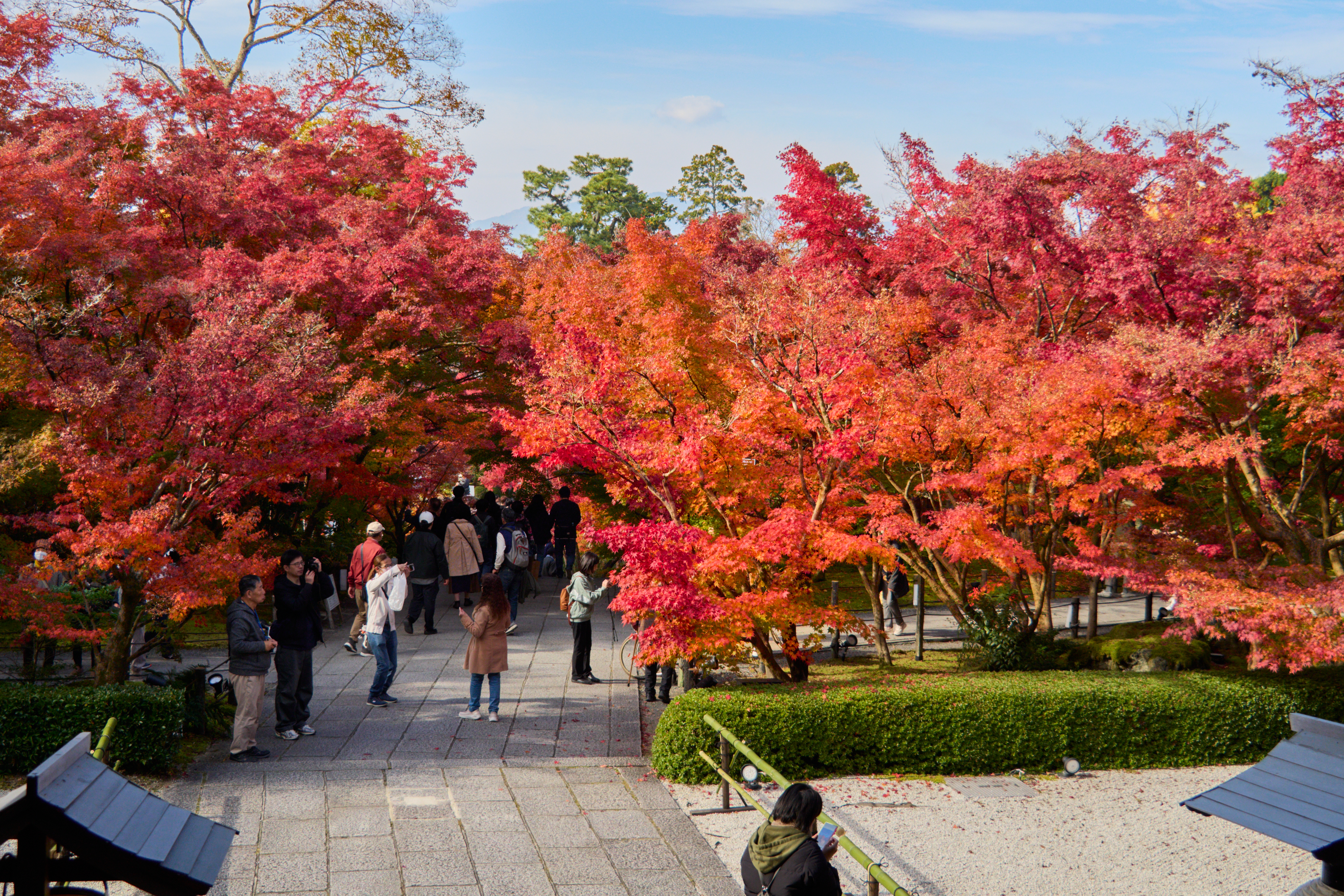
There is a shape to an autumn trip through Japan that we see again and again among our guests. It begins in Tokyo, climbs to Hakone for the maples, and then turns west: Kyoto or Osaka for the great temples and castles — and finally Kobe, where many travellers tell us they come, quite simply, to eat.
If that is your route, the timing is on your side. The maples of the Kansai lowlands — Kyoto’s temple gardens, Osaka’s parks, Kobe’s hillsides — generally reach their peak from late November into early December, later than the mountain resorts further east. The colour arrives in the second half of the journey, and it builds toward the last evenings. One caution before the list: the exact week shifts with each year’s weather, sometimes by a week or more. Check the official foliage reports as you travel, and let the leaves, not the calendar, set your days.
Kyoto: The Famous End of the Season
Kyoto in late autumn is the classic image of the Japanese fall, and three stops cover its range.
Eikando (Zenrin-ji) is the temple whose nickname is simply “Eikando of the maples.” Some three thousand maple trees fill its hillside grounds, and the still water of Hojo Pond holds the colour a second time, upside down. Go in the morning, walk the pond slowly, and climb to the pagoda for the view back over the red rooftops.
Tofuku-ji offers the opposite experience: not a pond but a valley. From the covered Tsutenkyo bridge, you look down into the Sengyokukan ravine, filled with around two thousand maples — a sea of red below a wooden bridge, and one of the most famous autumn views in the city.
Arashiyama, in the west of the city, is the landscape version. The whole mountainside behind the Togetsukyo bridge turns, and the garden of Tenryu-ji borrows those coloured hills as its backdrop. It is the most spacious of the three — a river, a bridge, and a mountain doing the work of a garden wall.
Osaka: A Waterfall and a Castle
Osaka is a working city, but its autumn is better than its reputation.
Minoo Park, north of the centre, is a wooded valley that ends at Minoo Falls. The walk up the valley path from the station takes about forty minutes, with the colour deepening as you climb; the park’s own foliage reports put the usual peak from mid-November into early December. It is the one stop on this list that feels like a hike rather than a visit — wear the shoes for it.
Back in the centre, Osaka Castle Park spreads its autumn around the castle keep: rows of ginkgo turning gold from late November into early December, maples in the gardens a little earlier. It pairs naturally with an Osaka sightseeing day and asks for no special trip.
Kobe: Colour Above the Dinner Table
Kobe’s autumn has a particular advantage for this route: much of it hangs directly above the city’s dining district.
Nunobiki Herb Gardens sit on the slope behind Shin-Kobe Station, reached by ropeway. The gardens hold around five hundred maple trees, and the official peak runs from early November into early December — but the real pleasure is the ride down: the gondola descends over the coloured slope with the whole city, and Sannomiya’s restaurant streets, spread out below you. You can be under the maples in the afternoon and at a dinner counter in the evening without a single transfer in between.

For a full day out, Arima Onsen — Kobe’s hot spring town, about thirty minutes from Sannomiya — has Zuihoji Park, a maple garden so admired that Toyotomi Hideyoshi is said to have lost track of the day there; locals still call it the “garden that eats the daylight.” Its season comes earlier than the city’s, usually from early to mid-November, and it combines with a soak in Arima’s golden spring water. And if your trip falls earlier still, the high ground of Mount Rokko and Mount Maya colours first of all — from mid-October into late November, roughly a month ahead of the streets below.
Why the Journey Should End at a Kobe Table
There is a practical reason the route ends in Kobe, and it is not only the beef. Kobe is close: Sannomiya is about half an hour from Osaka and under an hour from Kyoto by express train. A traveller based in either city can spend the day among the maples and still be in Kobe for dinner — and a traveller moving west can make Kobe the last night of the Kansai leg.
But dinner is the one part of this itinerary that cannot be improvised. The counters visitors cross the region for are small and reservation-only, with evening seatings that vary by weekday; in the foliage weeks, when the whole route is at its busiest, they fill early. Book the meal when your travel dates are fixed — before the hotels-and-leaves planning, not after it — and let the days arrange themselves around that fixed point. Our own guide, How to Book a Kobe Beef Restaurant in Kobe, walks through how booking works and what to check before you reserve.
Think of it as the route’s punctuation. Tokyo for the arrival, Hakone and Kansai for the colour — and the final evening at a counter of seven seats, where the dish in front of you is the reason the last stop was Kobe at all.
A Note from Our Counter in Kobe
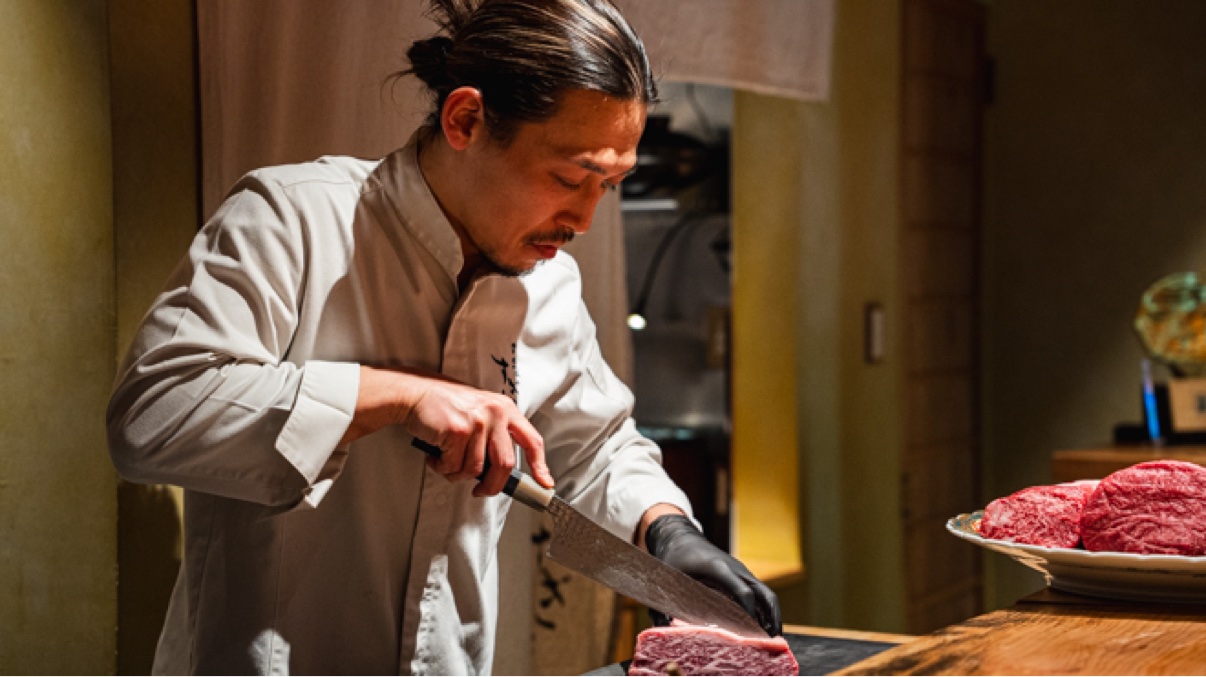
I write this as the chef-owner of Kobe Nikuryori Sugitani, a small restaurant in Sannomiya, Kobe. We are a designated registered restaurant of the Kobe Beef Marketing & Distribution Promotion Association — registration No. 2072 — and we serve only certified Kobe Beef, in an omakase course at a counter of just seven seats, by reservation only.
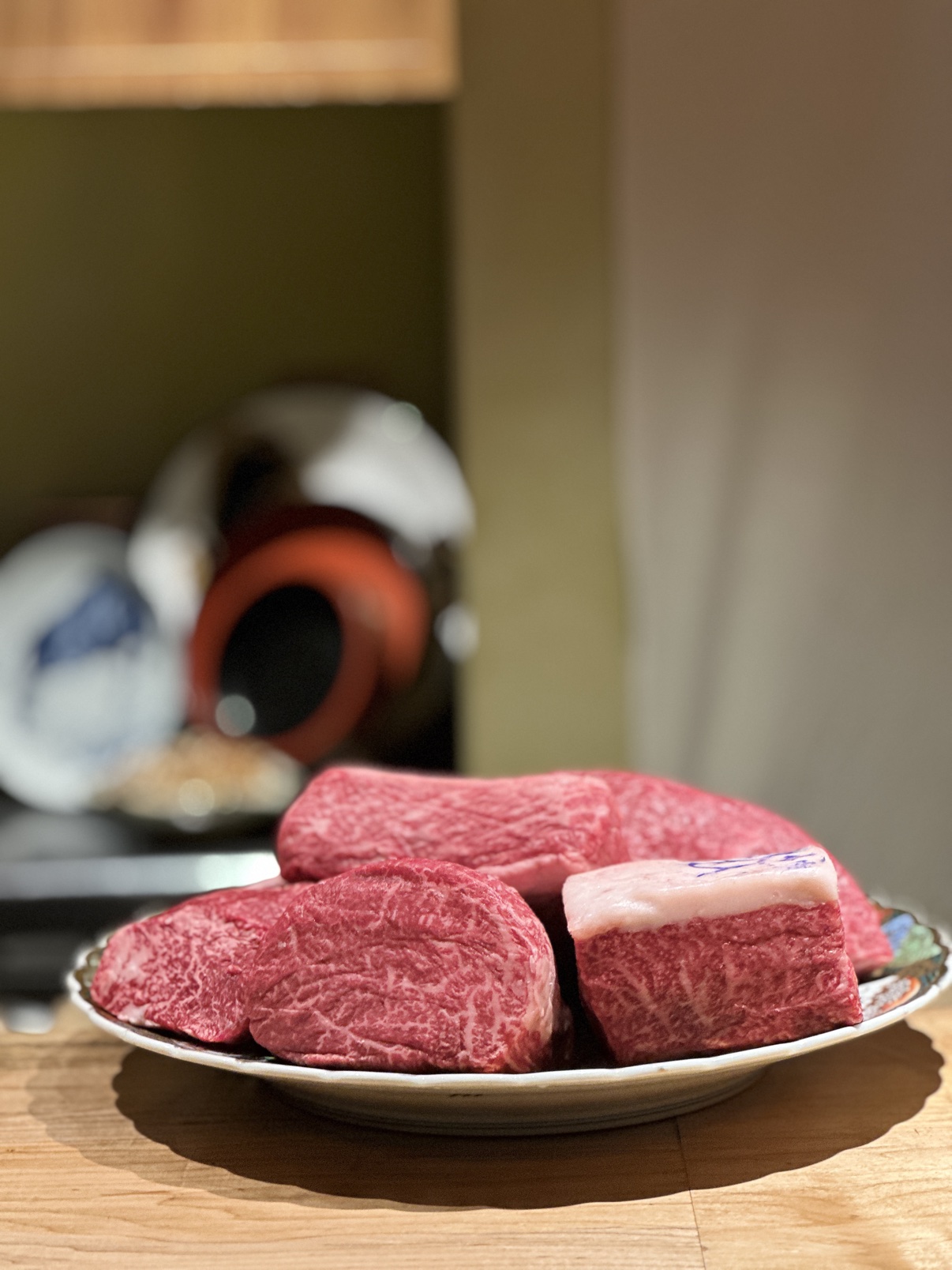
At our counter, Kobe Beef is not only a steak. Across the course, it appears in many forms — lightly seared, with seasonal ingredients and seafood, in a hand-rolled sushi with sea urchin and crab, and in a chirashi sushi that closes the meal — so that each dish shows a different side of the same beef. That variety is only possible because we know exactly what the beef is and where it came from.
If your travels bring you to Kobe and you would like to taste Kobe Beef that you can trace back to its certificate, we would be glad to welcome you. Reservations can be made here, or through OMAKASE, where bookings open two months ahead.
Sources: Minoo Park official site (mino-park.jp), foliage information page (updated 20 November 2026) — the usual peak from mid-November to early December, varying with the year’s weather. Osaka Prefecture official site — Minoo Falls, about a forty-minute walk from Hankyu Minoo Station. Osaka Castle Park official site (osakacastlepark.jp), autumn foliage map — ginkgo at their best from late November to early December, maples from mid- to late November. Tofuku-ji official site (tofukuji.jp) — the Tsutenkyo bridge over the Sengyokukan ravine; Keihan Group and Kyoto City Tourism Navi — around two thousand maples at Tofuku-ji. Eikando (Zenrin-ji) official site and Kyoto tourism guides — “Eikando of the maples,” some three thousand maples around Hojo Pond. Kobe Nunobiki Herb Gardens official site (kobeherb.com), 11 November 2026 — Nunobiki foliage at its best from early November to early December, around five hundred maples. Kobe Tourism Bureau (Feel KOBE) — Zuihoji Park in Arima Onsen, the maple garden admired by Toyotomi Hideyoshi, usually at its best from early to mid-November; Mount Rokko and Mount Maya foliage from mid-October to late November, about a month ahead of the city. Photo: Lumoplank, CC0, via Wikimedia Commons; 663highland, CC BY-SA 3.0, via Wikimedia Commons.
Leave a Reply